AI Product & Search Guides
Practical decisions about AI product development, intelligent search, scope, cost, and implementation.
To hire a SaaS developer, define the product responsibility before comparing profiles or rates. Ask for evidence from one shipped SaaS product: what the candidate personally owned, who used it, what changed after launch, and which failures they handled. As a practical starting point, consider a senior freelancer for one bounded product with a clear owner, an employee for a durable internal roadmap, or a product team when design, back-end, data, quality assurance, and operations need parallel ownership. This guide gives you a SaaS project brief, an evidence scorecard, and an account-and-handover checklist. Arsum’s current delivery offer is narrower than the general guidance: it is relevant when your SaaS product includes an AI application, intelligent search, or a defined AI feature. ...
MVP development for startups should produce a first release that lets the intended user complete one useful journey and gives the founder evidence about a business assumption. Define that journey before the feature list, review progress through working demonstrations, and agree on release acceptance before launch. As Arsum’s founder, my rule is to build something like a bicycle: simple enough to finish, complete enough for someone to use. This guide applies to any software MVP. Arsum’s related delivery offer is narrower: we build MVPs that include an AI application, intelligent search, or a defined AI feature inside an existing product. ...

AI code generation automation is useful only when a generated change can be reviewed and accepted in a real repository. Start with a bounded change, a written requirement and tests that check the intended behavior. The first decision is which work to delegate and which decisions remain with the engineer who owns the system. AI products & intelligent search Turn one product workflow into a working application ...

Estimate AI app development as a build budget plus a monthly operating budget. Arsum targets initial scoped engagements of USD $5,000–$20,000; a proposal determines what fits. Use the worksheets below to price integrations, retrieval, evaluation and support. The worked numbers are illustrative assumptions, not market prices or client results. AI products & intelligent search Turn one product workflow into a working application ...

Buy AI agent development services around a usable capability and an acceptance process. A proposal should say who will use the system, which information it can access, which actions it may take and how you will decide whether the delivered work is ready. “Build an AI agent” is too broad to compare budgets or hold a supplier accountable. AI products & intelligent search Turn one product workflow into a working application ...

Choose an AI agent architecture from the steps, state and actions your application needs. Start with a fixed workflow when the path is predictable. Add tool choice, planning or multiple agents only when a simpler design cannot do the job, and define how users approve, inspect and recover the result. AI products & intelligent search Turn one product workflow into a working application ...

AI for sales teams becomes a useful build project when it solves a defined information problem: finding the right account evidence, preparing a reliable summary or reconciling records across systems. Start by checking the underlying CRM and source data. Generating more confident text from incomplete records does not improve the team’s decisions. AI products & intelligent search Build search around your company's information ...
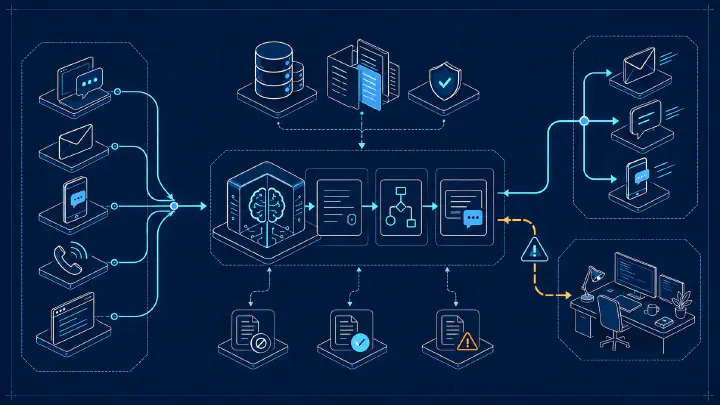
Start AI customer service automation with one support workflow you can measure and supervise. Searching product documentation, drafting a reply and changing a customer’s billing record carry different requirements. Define the first capability around your actual ticket queue, available knowledge and permission boundaries before choosing a tool or commissioning a custom build. AI products & intelligent search Build search around your company's information ...
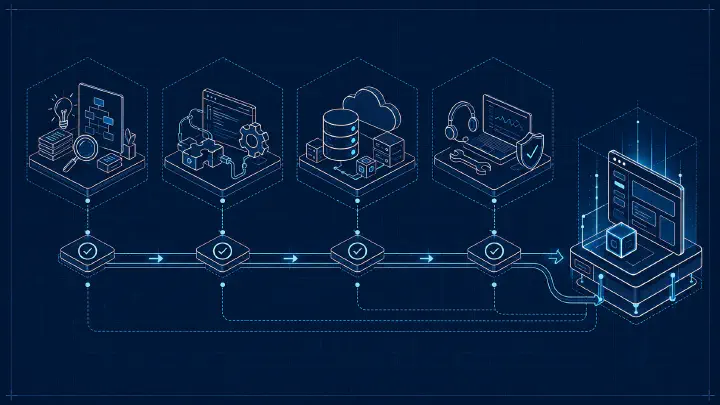
AI automation agency pricing is commonly structured as a fixed project, a monthly delivery budget, or an initial build plus ongoing support. Before comparing totals, separate four cost layers: architecture and discovery, implementation, third-party usage, and support. One disclosed Arsum project had a USD $5,000–$10,000 budget frame; it is a project example, not a rate card or market average. AI products & intelligent search Turn one product workflow into a working application ...
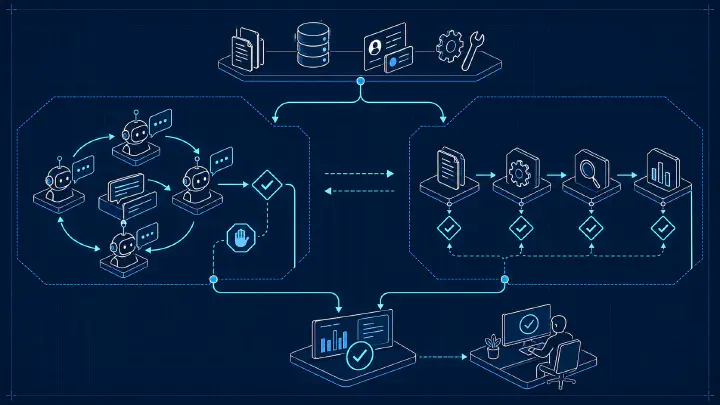
For a new application, account for AutoGen’s maintenance mode before comparing features with CrewAI. Microsoft directs new users to Agent Framework. Existing AutoGen teams still need to assess state, tools, approval and migration. This guide separates documented capabilities from performance questions to test in your own workflow. AI products & intelligent search Turn one product workflow into a working application Arsum builds applications and data systems with defined scope, evaluation, human review where needed, deployment, and handover. ...