A product experiment grounded in everyday plant care
Know Your Plant began with a goal Johnny Kartakov, Arsum’s founder, had set for himself: ship a product every month. Plant care became one of the ideas he chose to pursue. It combined a problem he could recognize in people around him with a category he wanted to explore commercially.
His partner at the time spent time gardening, and a friend described looking for a paid app when something went wrong with a plant. These were small, personal signals that the task mattered. The founder also researched competing products and saw room for search content about species, growing conditions, seasons and locations. That was his rationale for entering the category, rather than a measured claim about its size or the app’s future returns.
The useful product question was broader than naming a leaf in a photograph. A plant owner might need to identify an unfamiliar plant, understand its care, remember several recurring tasks, or investigate a change in its appearance. Arsum developed Know Your Plant as its own product around that sequence, retaining responsibility for the application and its continued operation.
“I decided that I'm gonna ship one product every month.”
Make identification the beginning of the workflow
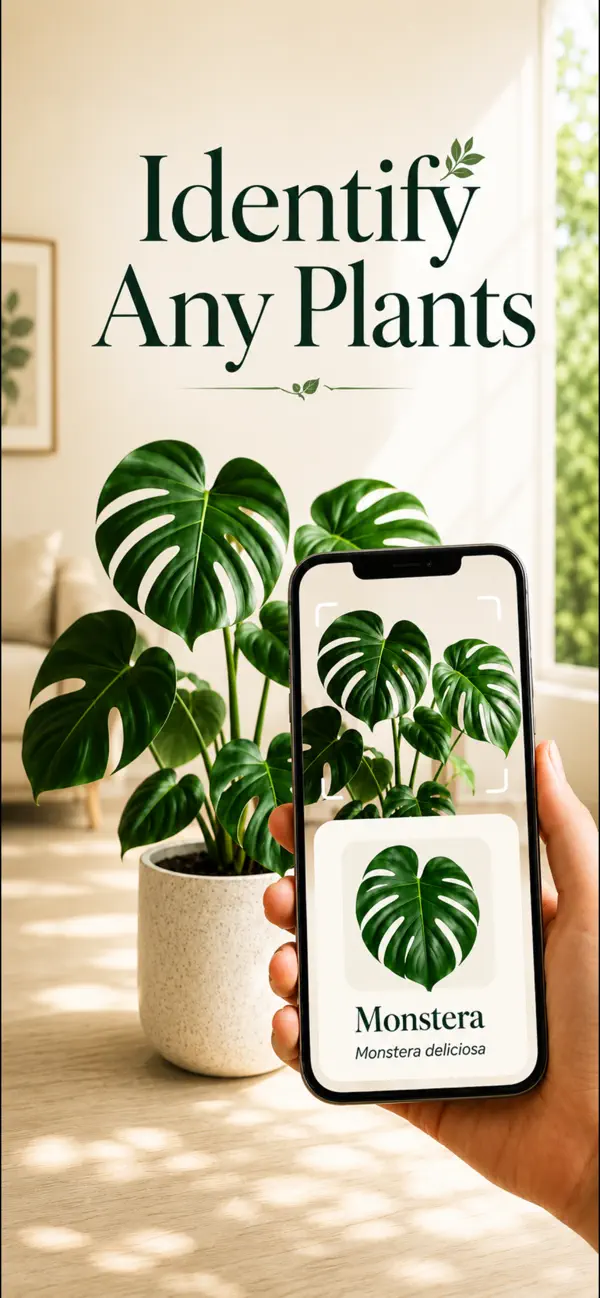
The user starts with a plant image. The application requests identification from its specialist provider and shows a processing screen while the response is being prepared. The result presents a likely plant, a description and care information, along with a confidence score and alternative candidates.
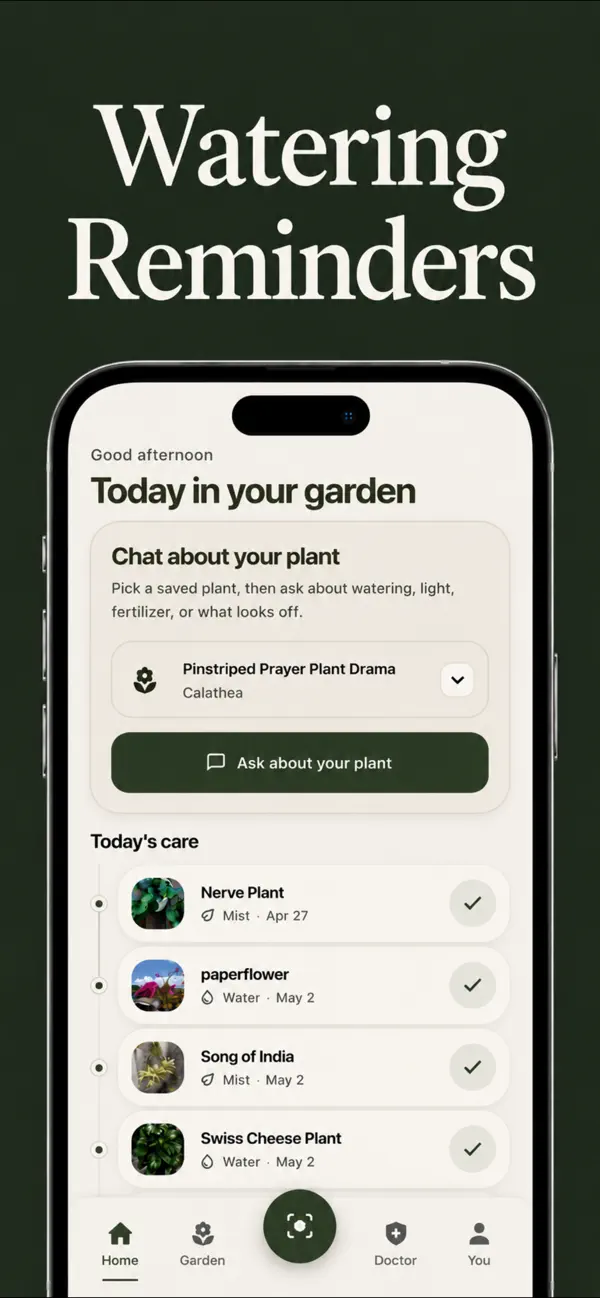
From that result, the user can choose to add the plant to their garden and create a care reminder. The saved plant gives the person somewhere to return, instead of leaving the identification as a one-off answer. The founder described watering and fertilizing reminders as part of the shipped experience, alongside help with possible plant-health problems.
This sequence determines what the application has to connect: an image submission, a response the person can inspect, an optional saved record and a later action. An identification service can supply useful information, but the mobile product still has to make those transitions understandable. The result screen, garden and reminder flow are therefore central parts of the engineering scope.
Build the product around the plant-intelligence service
Know Your Plant uses Kindwise APIs for plant identification and health functionality. The founder identifies this specialist service as the main source for those results. Kindwise’s public plant.id material separately documents its identification API and plant-data capabilities; it does not establish how accurately Know Your Plant performs on its own users’ photographs. Provider reference.
Arsum’s application work uses a Node.js backend and a Flutter mobile interface. The founder describes Flutter delivery for iOS and Android, with backend hosting on a VPS. The public release evidence linked here is the iOS App Store listing under Arsum LLC. The case does not infer a current Android store release from the framework choice alone. View the iOS listing.
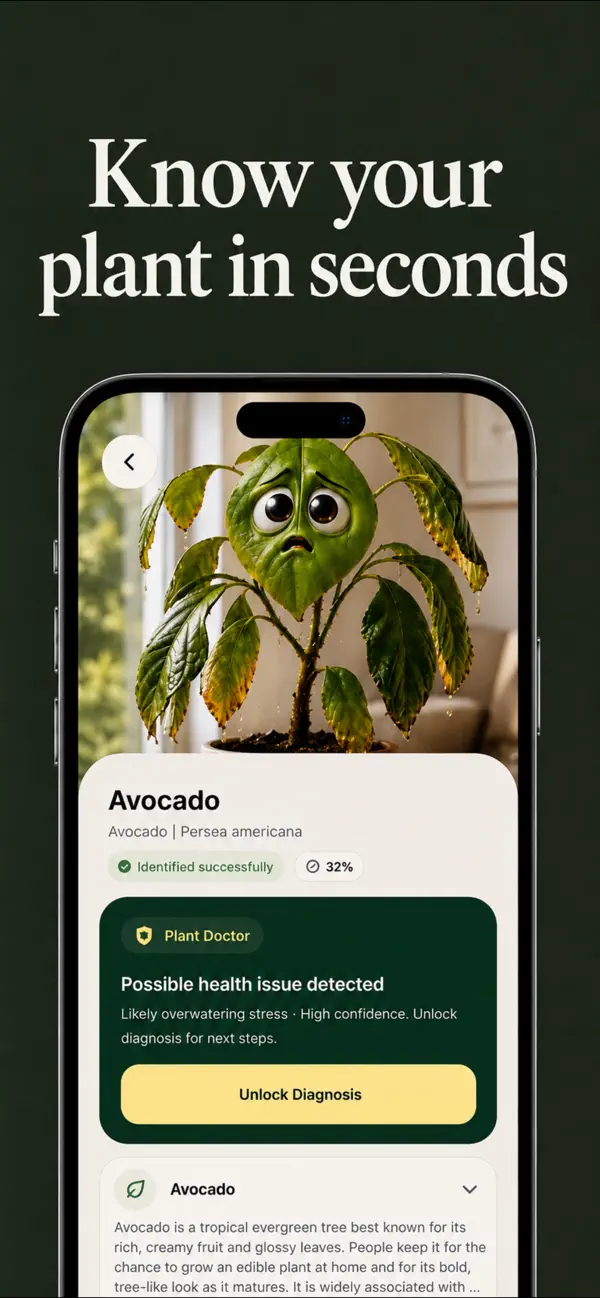
The engineering focus was the connection between the specialist response and the consumer experience: display the result, preserve the information the user chooses to save, expose care actions and support follow-up help. The application also includes language-model assistance and a separate AI chat, although the interview does not establish its exact model provider, prompt structure or retrieval design.
For a founder commissioning a similar app, this is a practical way to divide scope. Identify the capability supplied by a specialist, then specify the application behavior that remains yours to build and maintain. A provider selection settles only part of that decision; it does not specify your interface, saved state, reminders or support responsibilities.
The product around the specialist response
- 01
Plant image
The user submits a photograph through the mobile application.
- 02
Specialist response
The backend connects to Kindwise identification and health services.
- 03
Review the result
The interface presents a candidate, confidence, alternatives and care information.
- 04
Continue with care
The user can save a plant, create reminders and ask follow-up questions.
Let the user see when the answer is uncertain
The founder made confidence and alternatives part of the result experience. When confidence is low, the app still shows the score and other possible identifications. The person reviewing the result retains the decision rather than receiving a single answer with its uncertainty hidden.
A visible confidence number helps explain what the provider returned. It is not an independently measured accuracy rate for the complete application, and it does not establish that a care recommendation will work. The founder checked results manually and relied substantially on the provider’s identification service; no independent plant-identification benchmark was established in this interview.
The distinction is useful when evaluating an AI product build. Ask separately whether the interface displays the response correctly, whether the identification is appropriate for representative photographs, and whether the next action is understandable. Those are different acceptance questions. The responsibility map below describes the supported workflow, without implying a separate staff review queue or a guaranteed correct answer.
“Show the alternatives, but I also show the low confidence score. So it's up to user to decide.”
| Responsibility | What it supplies | What it does not establish |
|---|---|---|
| Specialist provider | Identification and plant-health responses, including identification confidence. | A provider score does not establish independently measured app accuracy. |
| Arsum application | The mobile flow, result presentation, saved garden, reminders and chat access. | Software behavior and result quality need separate checks. |
| Plant owner | The photograph and the choice of what to save or do next. | The described flow does not include a staff approval queue. |
Scope an AI integration and its acceptance checks
Discuss your provider and product boundariesConnect a saved plant to care and follow-up questions
A saved garden turns the application into a place the user can revisit. A plant owner managing several plants needs a way to remember which one a result belongs to and which tasks they intended to perform. Know Your Plant connects that record to reminders and a care-oriented interface.
Chat supplies another route when a person wants more explanation. The founder confirmed a separate AI chat alongside identification and plant-health help. The App Store’s garden artwork also presents an entry for asking about a saved plant. That illustrates the intended experience, without proving which context is passed to the model internally.
The important product connection is between discovery and continued use: identify a plant, review the information, save it when useful, and return for care. This case does not claim that reminders improved retention or plant health; those outcomes would need their own measurement. It documents the application features that make such an ongoing workflow possible.
Give useful plant-care content a route into the product
Distribution was part of the founder’s thinking before the build. He saw opportunities to answer questions about individual plants under different conditions: indoor or outdoor growing, seasons, places and care problems. Those examples explain the content direction, not a promise that every combination deserves a page or will attract visitors.
The work also includes automated Pinterest publishing connected to the articles. In the interview, the founder describes each post linking to an article and using a newly generated image. This connects the content library to a visual distribution channel, with the article serving as the destination for someone seeking more detail.
Ongoing work includes publishing content, checking how it appears in search, and checking that Pinterest posting continues to work. The founder reports referral activity, but dated analytics were not supplied to substantiate traffic or conversion figures. The supported result here is an operating content-and-distribution workflow, not a quantified acquisition win.
“Most of the work goes into search, SEO. I need to publish enough articles.”
Keep an owner attached to the application and its dependencies
Arsum continues to maintain Know Your Plant. The founder describes checking application errors, basic product activity, Search Console, new articles and Pinterest posting. That operating responsibility includes the mobile experience and the systems used to distribute the product.
The interview does not establish a particular monitoring platform, a formal response-time commitment or an automatic provider failover. It also does not substantiate automated test coverage. The case therefore keeps the operational account at the level supported: founder-led checks and maintenance, with manual review of identification behavior.
For a future build, a provider returning a low-confidence answer and a provider call failing altogether need separate handling. The first is a result the user must interpret; the second may interrupt the workflow. The interview did not establish dedicated error-rate, latency or retry reporting, so these remain questions to settle when scoping reliability work, rather than features claimed for this implementation.
“Arsum is me, me is Arsum.”
A consumer product around specialist AI
Know Your Plant brings together identification, confidence and alternatives, plant-health help, a saved garden, care reminders and AI chat. Arsum’s role spans the mobile interface, backend and API integration, product distribution and continued maintenance. The official iOS listing provides a public place to inspect the product and its advertised features.
The evidence supports that delivery scope. It does not establish a measured recognition accuracy, development budget, build duration, revenue or retention improvement. The screenshots are publisher-supplied store artwork, and the founder’s account supplies the implementation context. Each serves a different purpose in understanding the project.
If you are commissioning an AI mobile application, bring one concrete user journey, representative inputs and the external service you expect to use. Define what must happen after the response arrives, who makes the final choice, what is saved and who owns failures after launch. Know Your Plant shows how much of the product decision sits in that surrounding application work.
Results, a saved garden, reminders and follow-up help.
Content linked to automated visual publishing.
Product maintenance and distribution checks after launch.
Based on the supplied founder interview and official product, App Store and Kindwise pages checked on September 7, 2026. Quotes identify Arsum’s founder, not customers; selected excerpts preserve the supplied wording with line wrapping normalized. Unverified implementation details and approximate analytics are omitted. No original audio, independent accuracy benchmark or current-session app test was supplied for this case.